Everything you need to know about iPhone batteries
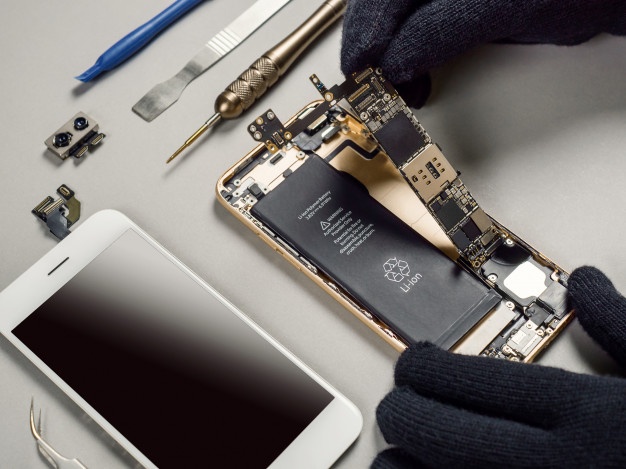
One could say that the battery in Apple iPhones is
a bit of a mystery. Since it cannot be extracted like some of its rivals, you
must have faith in its quality. When purchasing a refurbished iPhone, a strong
battery is just as crucial as a beautiful design.
Thankfully, you won’t be in the dark. In this
article, we’ll respond to some of the most frequently asked questions about
iPhone batteries, covering anything from how to evaluate good capacity levels
to how an iPhone battery typically performs across various models.
All of the recent and current Apple
smartphone models are compatible with everything in this tutorial. Where
appropriate, we have emphasized the battery performance of the various models.
But generally speaking,
All of the recent and current Apple smartphone
models are compatible with everything in this tutorial. Where appropriate, we
have emphasised the battery performance of the various models. However, whether
you want to purchase an iPhone 7 or iPhone 11, in general, this comprehensive
reference to iPhone batteries will be helpful to you.
Interpreting iPhone
Battery Capacity
Battery health is a new feature that Apple launched
with the introduction of iOS 11.3 in 2018, and it can provide you with a lot of
information about the size and functionality of your battery. Specifies, on a
range of 0 to 100%, how long your iPhone’s battery should survive between charges.
Your smartphone battery’s maximum capacity declines
over time. The capacity of a brand-new iPhone is normally 100%, however
repeated charging cycles and possible damage (such exposing the phone to
extremely high temperatures) lower capacity.
Peak performance also decreases when battery health
deteriorates.
What percentage of
an iPhone battery is deemed ideal?
Since your iPhone’s maximum capacity is 100%, you
could assume that this is the only situation that qualifies as ideal. It’s not
fully accurate, though. Any iPhone that has a battery capacity of 80% or higher
is deemed to be in excellent condition by Apple.
Apple actually places such a high value on battery
health that any battery with a capacity of 80% or more is covered by its 1-year
warranty. It’s not unusual to see iPhones with batteries that are at least 95%
charged after a year.
The cause is a form of intrinsic safety: Apple
makes its batteries with surplus capacity, which means that even when the
battery health gauge reads 100%, it does not actually consume the full amount
of working power. Your phone will still function at its best even when it is at
80%.
How to check your
iPhone’s battery life
You can find the battery capacity in Settings >
Battery > Battery Health on any iPhone running iOS 11.3 or later. It’s vital
to remember that only iPhone 6 and later models support this feature.
Peak Performance Capacity is a significant
secondary indicator that is also displayed on the Battery Health screen. This
screen can be more significant than the capacity due to the aforementioned.
You’ll notice a message stating that the battery is
delivering typical peak performance if your battery is functioning optimally to
support all applications. You will see a notification that your battery has
degraded and has to be changed if it is worn out and needs to be replaced.
The time between charging cycles will be much
shorter if you see the warning message, but your phone will still function.
Only when the battery capacity is 79% or less does this warning show.
How to improve
iPhone performance and battery life
Through the so-called “performance throttling” or
“performance management,” which generated a lot of controversy a few years ago,
Apple has attempted to increase the battery life of its mobile devices. To keep
your iPhone functioning and preserve battery life, Performance Management slows
down your phone’s performance on your behalf. You can manually turn it off, but
doing so will cause your iPhone battery to drain quickly because the device
will be operating practically to its maximum capacity.
Instead, adhere to Apple’s straightforward
instructions for extending the battery life of your phone:
Get iOS updated to the most recent version. New battery-care
features are added with every significant upgrade.
Try to keep the temperature of your phone between
16 and 22 oC on average. The lithium battery could be harmed by temperatures
either lower or higher.
When charging, keep temperatures under control.
Your phone may overheat on certain surfaces or with certain cases, which could
harm the battery. While it is charging, check it to make sure it remains fresh.
Keep the battery on your phone at 50%. A complete
discharge of the battery could result in a deep discharge and significant harm.
The battery could have the same result after being fully charged.
enable automatic brightness. The maximum brightness
option has a tendency to quickly deplete your battery, requiring quick charge
cycles and resulting in diminished battery health.
Under Settings > General > Background
refresh, look at background activities. Your battery will be depleted if
numerous programmes are running in the background.
Performance of iPhone batteries based on various
model types
Battery life and performance are definitely among
the most important factors to take into account while researching used iPhones.
You can consider elements like processor power or RAM memory, but how much
information does that actually provide about the mobile device’s actual user
experience?
Thankfully, there are additional signs as well. One
is the Geebench Performance Benchmark, which harmonises all iOS devices so that
performance may be directly compared. The outcomes are as follows, in order of
best to worst performance:
- iPhone 11 Pro Max – 1330
- iPhone 11 – 1280
- iPhone XS Max-1110
- iPhone XR-1108
- iPhone 8-92
- iPhone 7-742
- iPhone 6S-542
- iPhone 6-308
Battery life is another important component when
comparing iPhone models. AnandTech specialists examined the battery life of
each iPhone model from recent years. They based their comparison on the amount
of time a phone can take from a full charge while connected to a Wi-Fi network.
The results are the following:
- iPhone 11 Pro Max – 15.58 hours
- iPhone 11 – 2:03 p.m.
- iPhone XR – 12.95 hours
- iPhone 8 Plus – 11.83 hours
- iPhone XS Max – 10:31 a.m.
- iPhone 7 – 9.22 hours
Performance and battery life often follow linear
paths. Each new model typically includes additional features that conserve and
lengthen battery life and is more powerful than the one before it.
As a result, newer models tend to have longer
battery lives than earlier models and will be useable for longer, even if they
are not operating at full capacity.
Who has the longer lasting battery between refurbished and other phones?
You’ll eventually move past iPhones, logically. In
such case, you might want to consider how the performance and battery life of
Apple devices compare to those of the competition.
Apple typically comes out on top when it
comes to new phones. The iPhone models rate higher than their Android and
Google equivalents from the same year in both the performance and battery life
benchmarks mentioned above.
What about used
mobile devices?
It is wiser to believe iPhones in this
situation than other refurbished phones. In general, iPhones hold their worth
15% better each year than even the greatest Android devices. This suggests that
the battery lasts longer, performance doesn’t deteriorate as quickly, and the
screen is less susceptible to damage.
In a nutshell, the iPhone typically prevails in the
battery race. It not only has a strong beginning but also keeps its strength
for a longer period of time.
For those seeking a refurbished smartphone, it is a
decent option.
What can you
anticipate from a Alidigital-refurbished iPhone?
Every refurbished iPhone sold by Alidigital is
guaranteed to have a battery with at least 80% of its original capacity,
ensuring that it will function and operate like a brand-new iPhone. The battery
does not need to be changed in order to achieve the desired performance. Other
iPhone dealers do not provide this assurance. If you’re unlucky, your battery
might have a capacity of less than 80%, which would greatly affect its
performance and remaining life. Before making a purchase, it is crucial to
think about these factors.
Even a battery in pristine condition would not be
as efficient as one on a newer model, especially on older models.


Comments
Post a Comment